What lift cables do and how trouble starts
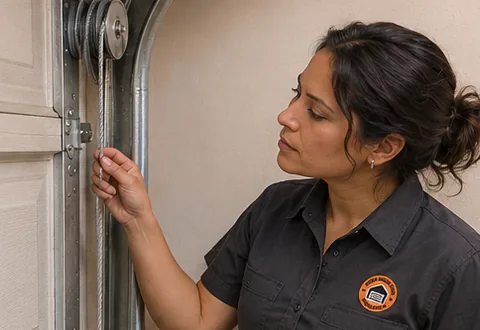
Lift cables work with the springs to raise and lower the door evenly. On a torsion system, the cables usually run from the lower corners up to drums near the shaft. A cable may wear gradually where it contacts another part, or it may come out of place when the door shifts. Rust near the lower end and visible broken strands can be early signs.
A search for garage door repair near me often follows a door that has suddenly gone crooked. The symptoms can overlap with those of a damaged track or roller. If you can see a hanging strand from a safe distance, tell us which side of the door it is on and leave the hardware alone.
How we inspect the whole lift system
The technician checks the affected cable and looks for anything that might cause a replacement to wear in the same way. That includes looking at the drums, bottom fixtures, spring balance, and roller travel. An uneven floor or an older panel can influence what the closed door looks like, so we consider its movement as well as its position.
A cable repair restores support only when the parts that guide and lift the door also work properly. If we see a bent guide or a roller outside the channel, we will discuss the findings with you. Our track repair guide covers those additional symptoms.
Describe where the door is sitting
Some attached garages around Bergen-Lafayette have limited room beside the opening. If you are booking garage door repair in Jersey City, NJ, let us know which side has clearance and whether the garage can be reached through another door. A tilted overhead door can make the vehicle entrance difficult to access.
When a garage door repair service near me search follows a sudden drop or loud scrape, tell us how far the door was open when it happened. Stop using the controls and keep people away from the opening. Leave cables, drums, and bottom fixtures undisturbed for the technician.